
Tea is one of the world’s most beloved beverages, offering comfort and health benefits. Yet in a rush for convenience, far too many tea drinkers have settled for the quick fix of bagged tea without realising what they are missing. Let’s compare bagged tea to loose leaf tea and see why the traditional (and proper) brewing method offers a superior experience in literally every way.
1. Taste and Aroma Excellence
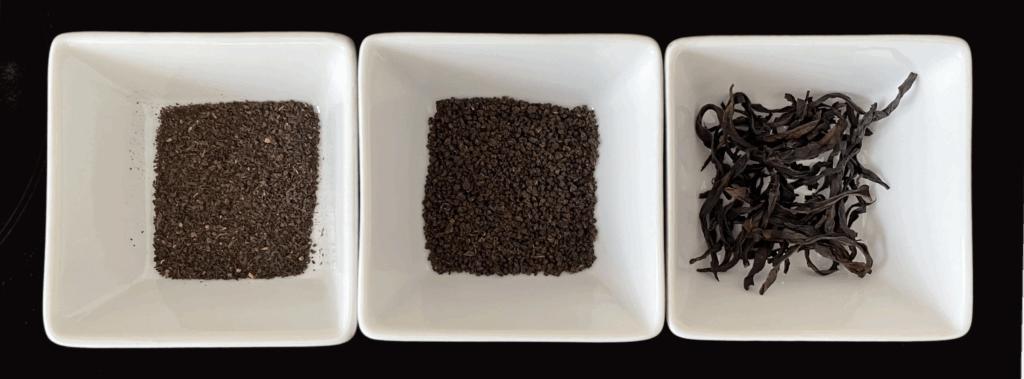
Loose leaf tea provides more balanced and complex taste and aroma than its bagged counterpart, and there is solid science behind this claim. When tea leaves are left whole or only lightly broken, they retain their essential oils and complex chemical compounds that create tea’s distinctive flavours. These larger leaf pieces have more surface area and structural integrity, allowing for a more complete extraction of the delicate notes that make each tea variety unique.
In contrast, most bagged teas contain what is known as “tea dust” or “fannings” – the smallest particles left over from processing higher-grade teas or produced in such a way on purpose using industrial CTC (Crush, tear, curl) method. While these tiny pieces brew quickly, they have lost much of their nuanced flavour profile and often produce a more astringent, one-dimensional cup.
2. The Brewing Process Quality
Loose leaf tea brewing process yields better results because you have complete control over every variable. You can adjust the amount of tea, water temperature, and steeping time to suit your preferences and the specific tea variety. This flexibility allows to unlock the full potential of your tea, whether you are brewing a delicate green tea that requires cooler water or a robust Camellia Sinensis Assamica black tea that requires close to boiling temperatures to properly release its aromatic components.
Bagged tea, by design, is meant to be brewed in a way often resulting in either under-extraction (weak, watery tea) or over-extraction (bitter, harsh flavours). Its brewing parameters can hardly be optimised for individual preferences or tea types.
3. Eliminating Unwanted Flavours
One of the most noticeable differences is that there is no unpleasant taste of paper when brewing loose leaf tea. Tea bags often impart papery or chemical notes to your brew, corrupting the taste of the tea.
4. Purity and Safety
Brewing loose leaf tea substantially lowers any risks of residues of unwanted materials penetrating to the brew. Commercial tea bags may contain microplastics, bleaching agents, or adhesives used in the manufacturing process. Groundbreaking research has revealed alarming levels of microplastic contamination from tea bags. A landmark 2019 study found that steeping a single plastic teabag at brewing temperature releases approximately 11.6 billion microplastics and 3.1 billion nanoplastics into a single cup of tea1. More recent 2024 research confirmed these findings, showing that tea bags can release between 8 million and 1.2 billion microplastic particles per millilitre of water, depending on the bag material2. Such contamination can be entirely avoided with loose leaf tea.
5. Superior Tea Quality
Loose leaf teas are typically made from higher-grade tea leaves. Tea producers generally use better leaves for loose leaf products, while lower-quality leaves, dust, and fannings are relegated to tea bags. This means you are literally getting a better product when you choose loose leaf.
6. Economic Value
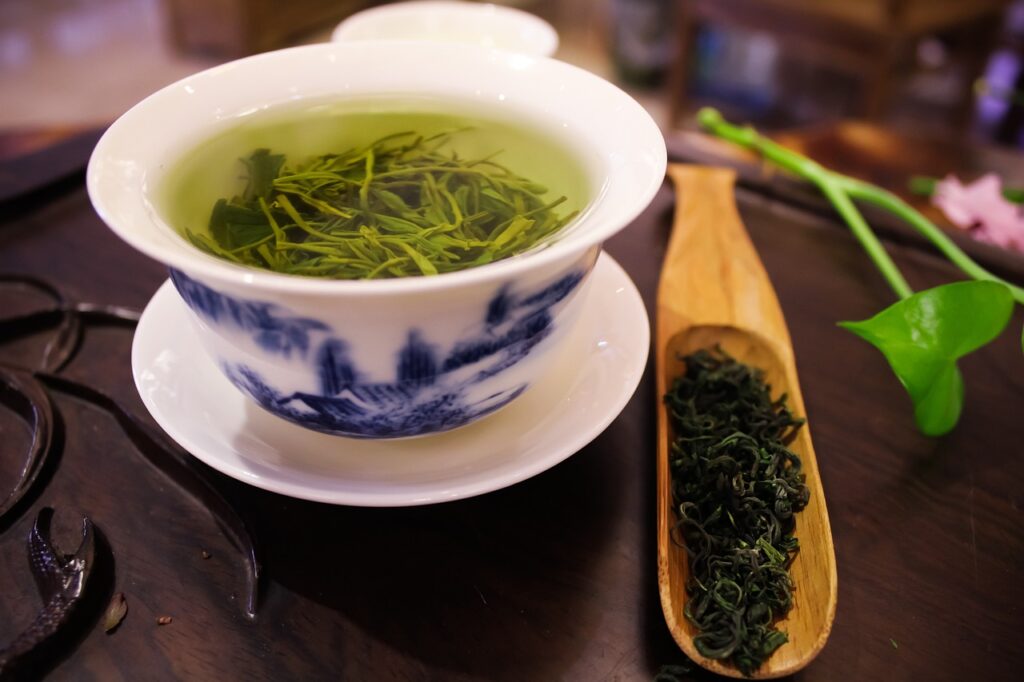
While loose leaf tea may seem more expensive upfront, it is actually more economical in the long run. Most loose leaf teas can be steeped multiple times, with some premium varieties like oolong or pu-erh offering 5 to 8+ flavourful infusions from the same leaves. A single portion of loose leaf green tea provides the equivalent of 3-4 tea bags worth of drinking pleasure. It is difficult to obtain even 3 flavourful brews from any tea bag, because tea blends used in tea bags are designed to be brewed only once. This is why they release vast majority of aromatic compounds at first brewing.
7. Environmental Sustainability
Loose leaf tea is significantly more environmentally friendly as it leaves less carbon footprint. There is no individual packaging waste, no plastic tea bag materials ending up in landfills or oceans, and typically less overall packaging. Many loose leaf teas come in reusable containers or recyclable/compostable paper packaging. Moreover, the used tea leaves themselves make excellent compost.
8. Transparency and Traceability
With loose leaf tea, the consumer can easier understand what he is buying. The leaf quality, size, and colour can be examined in a tea shop before the purchase. With many specialty teas one can trace the tea back to a specific production region or even to a particular tea garden. This transparency is nearly impossible to achieve with bagged tea, which 99% of times consist of blends from multiple estates, regions, countries or even continents to ensure brand flavour profile consistency at minimum cost.
9. Tea Freshness and Longevity
Loose leaf tea stays fresh longer than bagged tea. The larger leaf pieces retain their essential oils and flavours better over time, especially when stored properly. Tea bags, with their smaller particles and often inferior packaging, tend to go stale more quickly and lose their potency. It is caused among other factors by bigger surface exposed to oxidation and humidity in case of bagged broken tea leaves or tea dust.
10. Customisation and Control of Caffeine Content
Loose leaf tea allows for more customisation. You can create your own blends, adjust strength to your exact preference, and experiment with different steeping techniques. This creative aspect is barely achievable with the standardised portions of bagged tea.
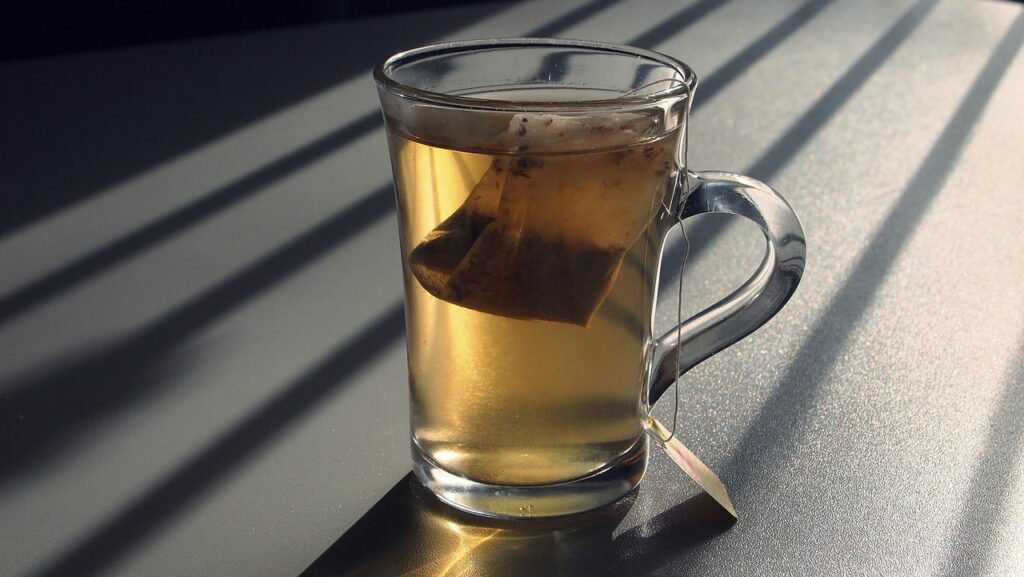
Loose leaf tea also gives you more control over brew’s caffeine content. By adjusting steeping time and leaf quantity, you can make your tea stronger or milder as desired. The multiple infusions possible with loose leaf also allow you to enjoy more cups with gradually decreasing caffeine levels throughout the day.
11. Wider Variety and Specialty Options
The world of loose leaf tea offers an incredible diversity that is simply not available in bagged form. From artisanal single-estate teas to aged varieties, the most interesting and unique teas are only available as loose leaf. This opens up a world of exploration for tea enthusiasts.
12. Health Benefits Optimisation
Last but not least, the higher quality and better extraction methods of loose leaf tea mean you are getting more of the beneficial compounds that make tea healthy. Antioxidants, polyphenols, and other health-promoting substances are better preserved and extracted in loose leaf preparations3.
Sometimes transitioning from bagged to loose leaf tea might seem daunting, but in fact it doesn’t require any sophisticated equipment. A simple strainer, infuser basket, or even a French press (a new one, with no coffee ever brewed in) can get you started. Any subsequent investment in more specialised tea ware will also pay dividends in the enhanced tea experience.
The world of loose leaf tea offers a journey of discovery that bagged tea simply cannot match. From the first aromatic whiff when you open a tin of loose leaf tea to the last satisfying sip of a perfectly brewed cup, every aspect of the experience is elevated. While convenience has its place, some pleasures in life are worth the extra few minutes of attention and tea is certainly one of them. Whether you are a casual tea drinker looking to upgrade your daily cup or a budding tea enthusiast ready to explore new horizons, loose leaf tea offers a path to deeper appreciation, improved health benefits, and more sustainable consumption.
- Hernandez, L.M., Xu, E.G., Larsson, H.C., Tahara, R., Maisuria, V.B., & Tufenkji, N. (2019). Plastic Teabags Release Billions of Microparticles and Nanoparticles into Tea. Environmental Science & Technology, 53(21), 12300-12310. DOI: 10.1021/acs.est.9b02540 ↩︎
- Domínguez-Morueco, N., Augusto, S., Trabalón, L., Esteve-Turrillas, F.A., & Lloret-Capella, E. (2024). Microplastic and nanoplastic migration from plastic tea bags to tea infusion: Influence of steeping time and temperature. Food Chemistry, 435, 137529. DOI: 10.1016/j.foodchem.2023.137529 ↩︎
- Ananingsih, V.K., Sharma, A., & Zhou, W. (2013). Green tea catechins during food processing and storage: A review on stability and detection. Food Research International, 50(2), 469-479. DOI: 10.1016/j.foodres.2011.03.00 ↩︎